01 / volume
More agents created more decisions.
Threads, artifacts, and suggestions multiplied faster than the next responsible action could be named.
Hermes profile system
HAI did not come from a clean slide deck. It came from agent threads that produced too much, control surfaces that became heavy, handoffs that drifted, and completion claims that needed proof. Hermes is the private working system where those failures turned into roles, gates, and verifiers.
What had to be learned
The hard lesson was not that agents are weak. It was that unmanaged agent work can make the human less oriented while still looking productive. Hermes is the answer to that pressure.
Threads, artifacts, and suggestions multiplied faster than the next responsible action could be named.
Raw logs and broad towers exposed activity, but they did not decide who owns risk, scope, or proof.
Operator, verifier, firewall, executor, validator, and meta profiles started doing distinct jobs.
HAI emerged as the discipline of turning messy human intent into one bounded, checkable next step.
Hermes fleet
Samuel's setup is intentionally split. One profile keeps the main session responsive, another compresses overload, another validates execution, and another guards project intake. The system got useful when the roles stopped pretending to be one universal assistant.
These profiles stop uncontrolled expansion and turn noisy agent work back into owner decisions.
operator
cognitive-firewall
project-admission-controller
decision-control
The HAI chain reads project state, intent, and code reality before any execution is allowed.
hai-agent
hai-agent-idea
hai-agent-code
hai-agent-briefing
hai-executer
hai-validator
These profiles check root cause, regression risk, permissions, and whether evidence actually proves the claim.
verifier
regression-guardian
security-permissions
Meta profiles keep the fleet legible. Worker profiles exist, but only become useful inside gates.
meta
meta-new-agent
skill-curator
hermes-harness-expert
oktopus-*
Working loop
This is the part clients can reuse. HAI does not ask a team to copy Samuel's private setup. It installs the same operating discipline around one real workflow where agents currently create confusion.
Is this actually active work, or another idea trying to become a project?
Read the project, goal, local files, and current constraints before proposing work.
Compress options into a human-readable owner packet with scope and tradeoffs.
Cut everything down to one bounded task with explicit allowed and forbidden changes.
Let a worker act only inside the accepted contract and write an execution report.
Separate the builder from the judge. Evidence decides whether the claim stands.
Friction turned into rules
Hermes is not presented as perfect. Its value is that repeated failures became explicit controls instead of private habits inside Samuel's head.
Long reports, raw logs, and multiple options were converted into owner packets. Solution: Cognitive Firewall and bounded briefings.
Delegation moved behind explicit contracts with scope, artifacts, timeout, verifier, and rejoin rules. Solution: Operator contract.
Verification became root-cause oriented: prove the old failure cannot silently return. Solution: Verifier and Regression Guardian.
New work must pass admission before agents, time, or code are spent. Solution: Project Admission Controller.
Dedicated profiles, registry checks, and smoke tests separated "configured" from "actually works." Solution: Meta and Harness Expert profiles.
The builder writes a report; the validator reads the diff and decides ACCEPT, REJECT, or UNCLEAR. Solution: HAI Executer plus HAI Validator.
Artifact trail
The private profile system stays private. The customer-facing evidence is the repeated artifact pattern: Sidecar for overload, control-tower experiments for scope, harnesses for evaluation, and HAI for next-step discipline.
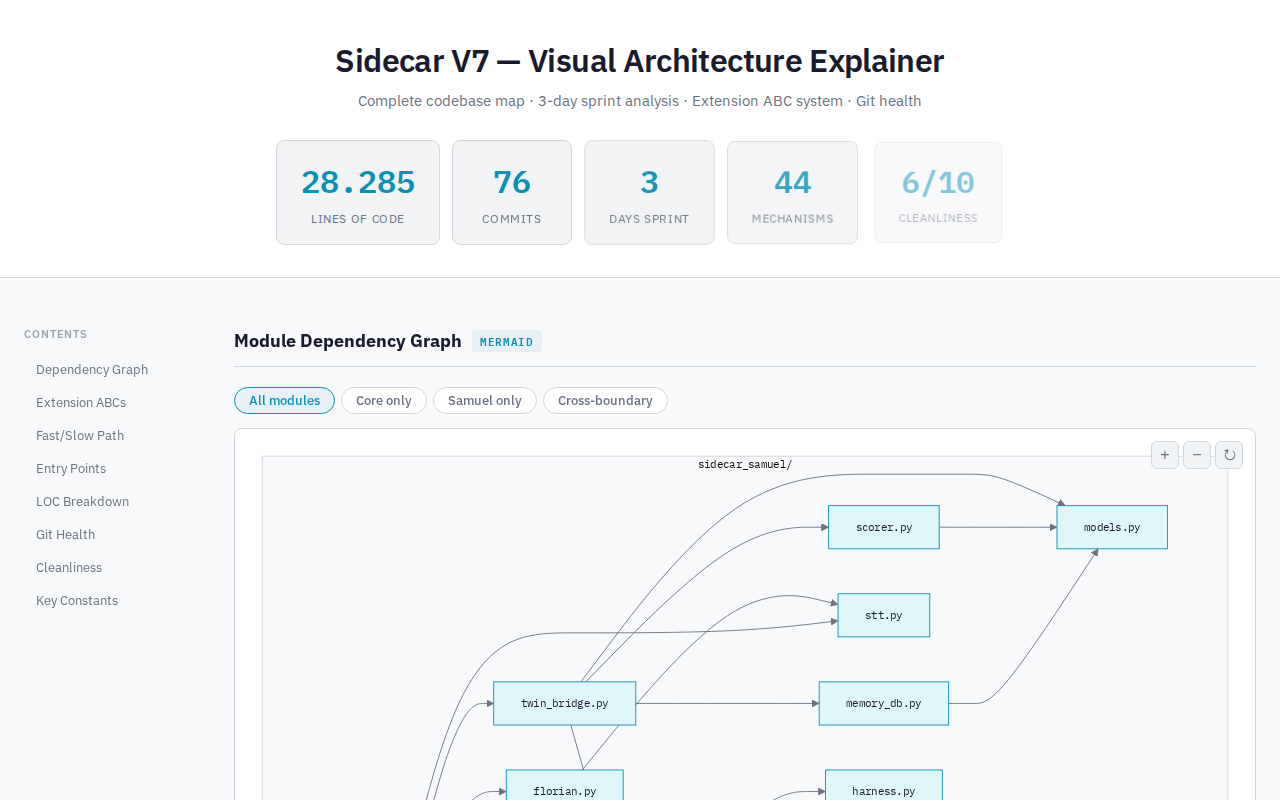
Sidecar made overload and drift visible as part of the human-agent loop, not as a personal weakness.
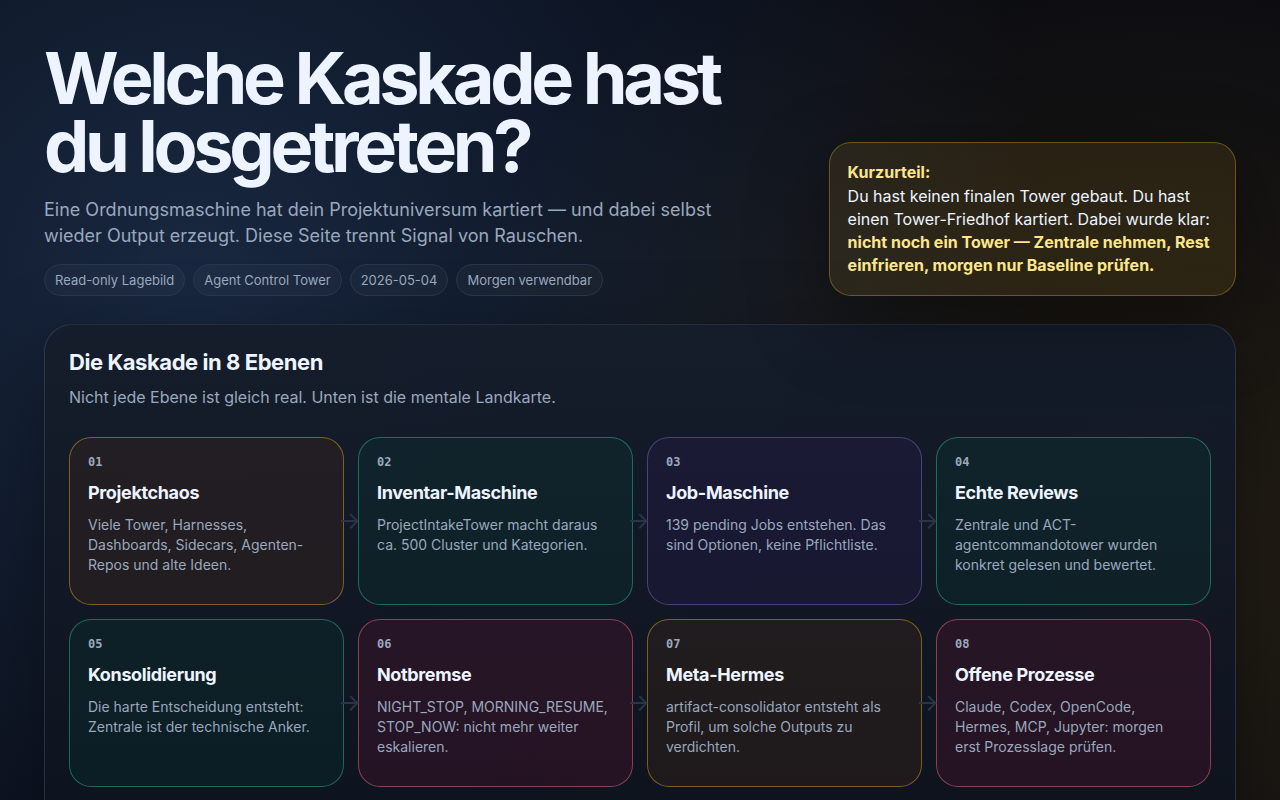
The tower line proved that more orchestration can increase burden unless owner gates stay central.
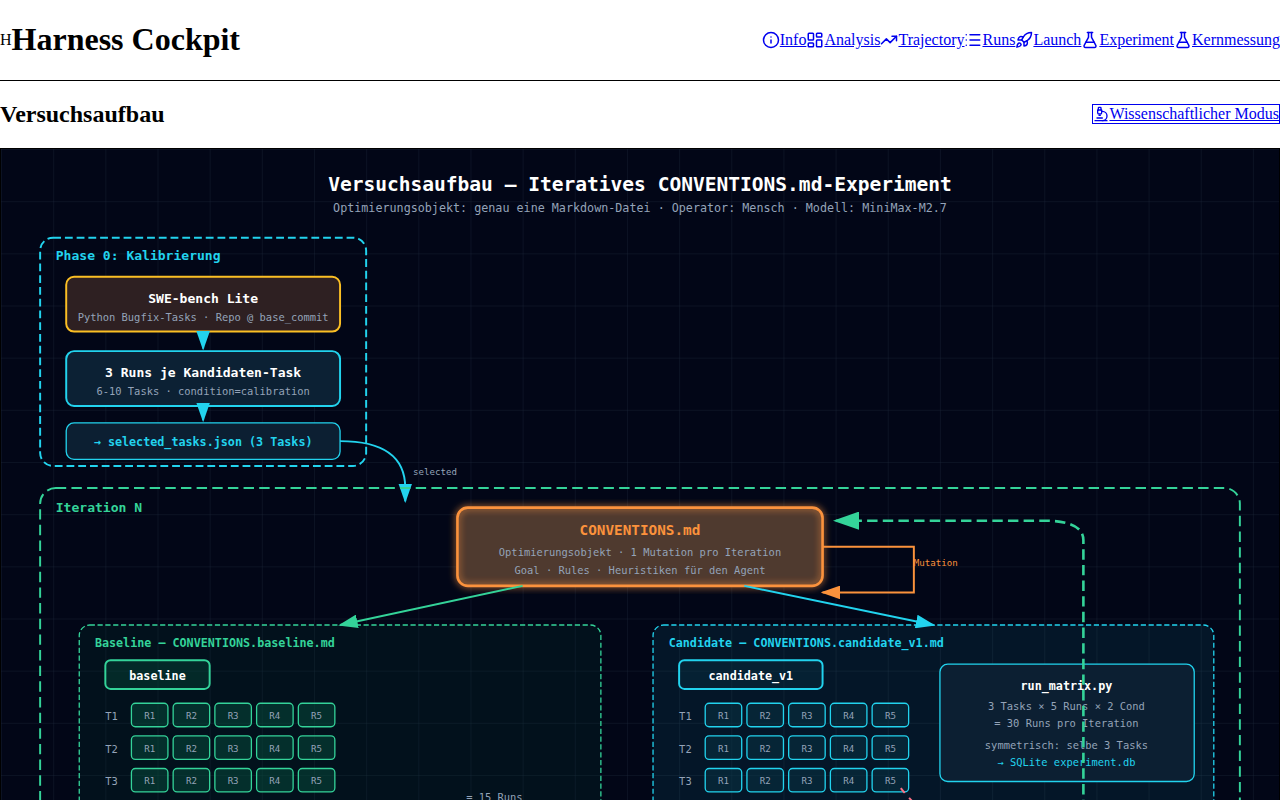
Harness work turned model behavior into traces and verdicts that can be inspected instead of believed.
What a client gets
Bring one agent workflow that currently creates confusion. The useful output is a smaller loop: who owns the decision, what the agent may do, what artifact proves progress, and when work must stop.